
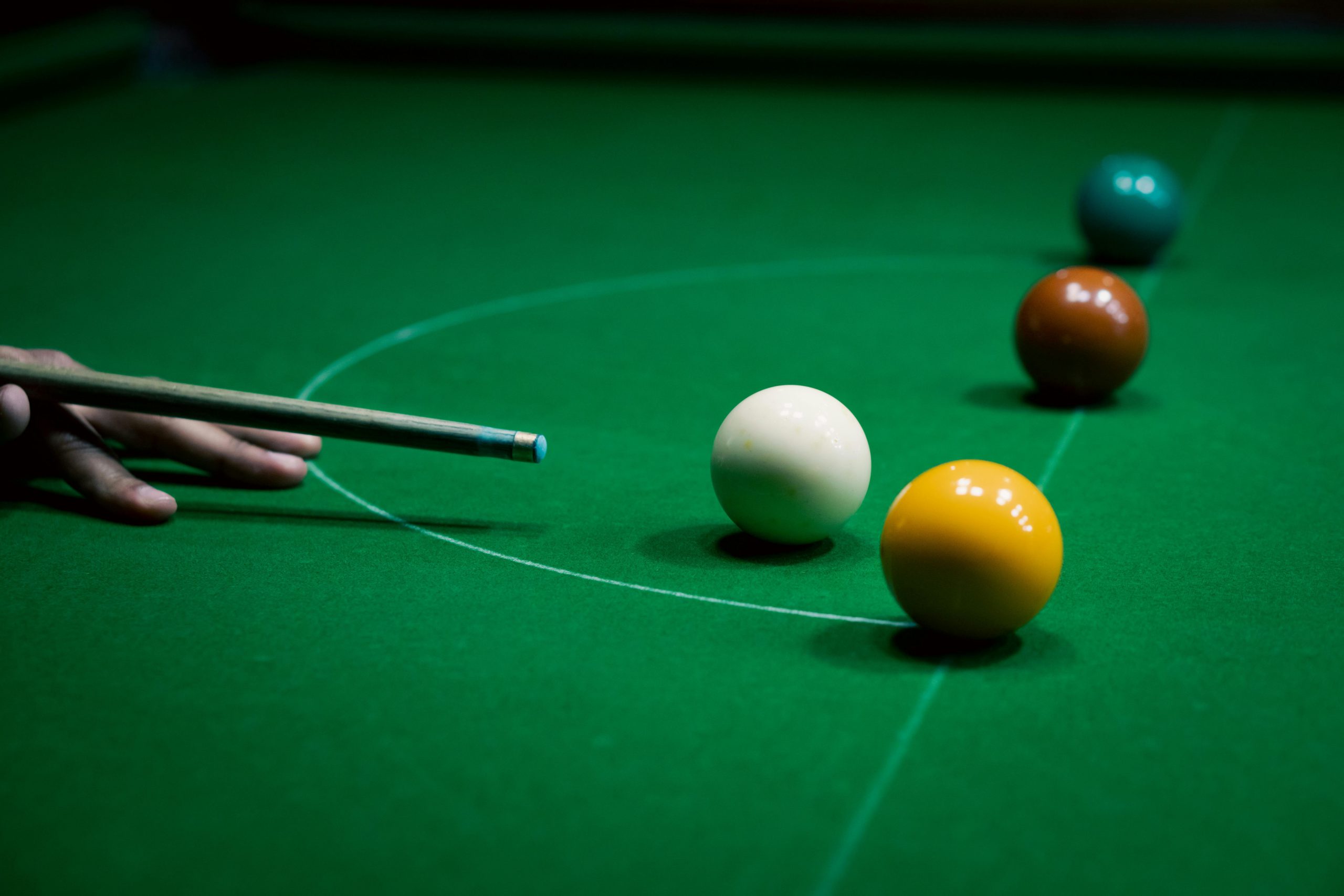
Cue sports often get grouped together, but there are clear distinctions between snooker and billiards that affect gameplay, rules, and equipment. One of the most noticeable differences begins with the billiard table, which is typically used for games like English billiards or carom billiards. These tables are generally smaller than snooker tables and may not include pockets, depending on the variation being played. The playing surface, cushion response, and ball setup all contribute to a faster, more direct style of play that focuses on precision and control.
By comparison, a snooker table is significantly larger and designed to create a more strategic and technically demanding experience. Standard full-size snooker tables measure 12 feet by 6 feet, making them much bigger than most billiards tables. The pockets are also smaller and more rounded, which increases the difficulty of potting balls. This combination of size and pocket design requires players to develop a high level of accuracy and positional play.
Another key difference lies in the rules and scoring systems. Billiards, particularly English billiards, is based on accumulating points through a combination of cannons, in-offs, and pots. Players can score in multiple ways within a single turn, leading to continuous play and high-scoring games. The objective is to reach a predetermined points total rather than clearing balls in a specific sequence.
Snooker, on the other hand, follows a structured sequence of play involving red balls and coloured balls. Players must pot a red ball first, followed by a colour, and continue this pattern. Each ball has a specific point value, and the goal is to score more points than the opponent by the end of the frame. Strategy plays a significant role, particularly in safety shots where players aim to make it difficult for their opponent to score.
The number and type of balls used also differ. In billiards, the game is typically played with three balls: a white cue ball, a second cue ball (often yellow), and a red object ball. This simplicity allows for a strong focus on shot-making techniques and positional control. Snooker uses 22 balls in total: 15 red balls, six coloured balls, and one cue ball. The larger number of balls adds complexity and requires careful planning throughout the game.
Table markings and layout further highlight the differences. Billiards tables have fewer markings, usually limited to spots that guide ball placement. Snooker tables feature a more detailed layout, including the baulk line, D area, and designated spots for each coloured ball. These markings are essential for maintaining the structure and flow of the game.
In terms of playing style, billiards tends to be more fluid and continuous, with players often maintaining long breaks through consistent scoring. Snooker is more tactical, with an emphasis on both attacking and defensive play. Players must think several shots ahead, balancing risk and reward with each decision.
Ultimately, while both games share common roots and use similar equipment, the differences in table size, rules, and gameplay create two distinct experiences. Whether someone prefers the precision of billiards or the strategy of snooker often comes down to personal playing style and preference.
































 But Victoria moved to shore up apprenticeships in the state budget earlier this year, amid uncertainty over how the looming higher education changes will affect vocational education and training. The government dedicated just an additional $12 million for skills across the following two decades, with $8m for an apprenticeship service program and $4m to subsidise training for targeted employees in variety of trades including


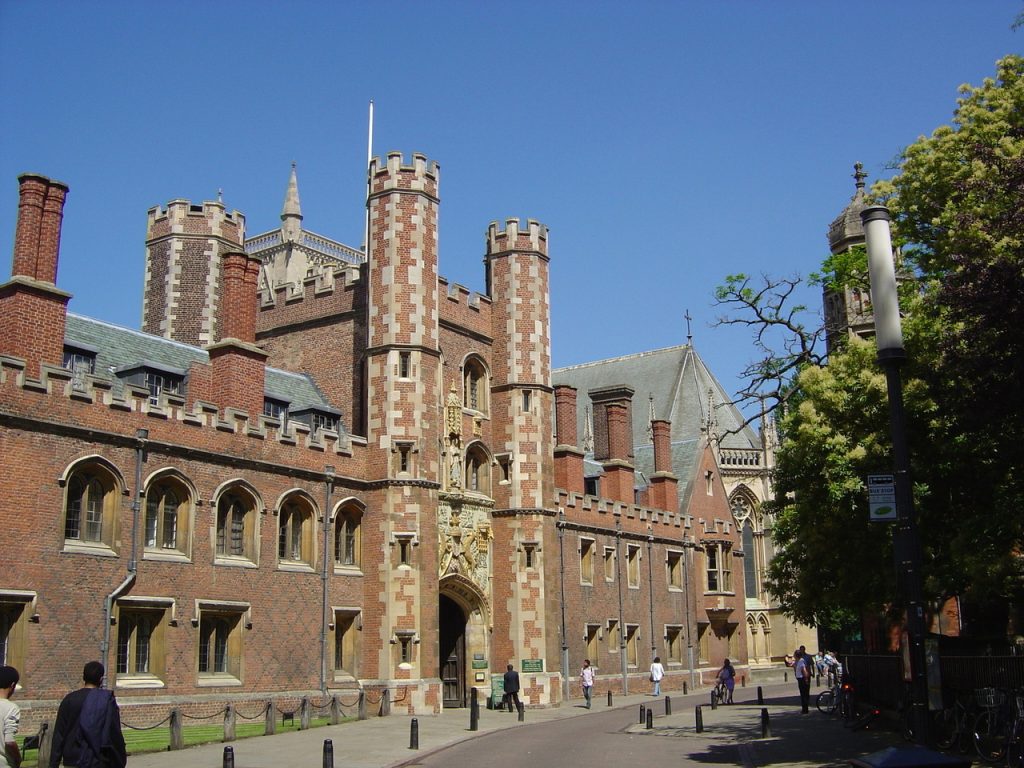
 CampusBird is an item of Concept3D, a location-based software and 3D services business based in Stone, CO. CampusBird was introduced in 2012 with the objective of “transforming the school map,” and today counts 250 schools, some with numerous campuses, amongst its clients. CampusBird’s designers construct 3D maps using Google Maps and OpenStreetMap. They include layers to produce 3D makings that portray structures and landscape functions. Their software has been tested through

 . This removes the issues of mismatched schedules, locating a meeting location as well as providing work for the review between meetings.